


Business Risk Management System

Intake & Centralization
All incoming communication channels—whether it's customer emails, web forms, live chat, or internal employee messages—are funneled into a single, unified inbox.
This eliminates scattered communication, ensuring no request is missed or lost in transit.
Smart Routing & Assignment
The system automatically categorizes and prioritizes incoming tickets based on predefined rules, keywords, or department tags.
Requests are instantly routed to the correct department or specialist (e.g., product queries go to Customer Support, while hardware or access issues go to Internal IT/HR).
Tracking & Resolution Management
Once assigned, the system tracks the progress of each ticket in real time against Service Level Agreements (SLAs) and defined timelines.
It provides teams with collaboration tools, status updates, and automated reminders to drive every issue efficiently toward a logical resolution.
Omni-Audience Support Delivery
Operating as a dual-purpose engine, the platform simultaneously manages external stakeholders (resolving client product questions, orders, and customer service needs) and internal stakeholders (handling employee onboarding, IT troubleshooting, and HR requests).
- Dual Risk Mitigation (Budget & Revenue): Manages both expenditure risks and revenue projections to ensure project financial planning remains accurate, transparent, and aligned with strategic business goals.
- Comprehensive Cost Structuring: Captures key metrics—including Cost of Construction (COC) and Other Costs (OC)—to build accurate financial plans for ongoing and pipeline development projects.
- Multi-Year Risk Continuity: Tracks active budget and revenue risks and carries them forward into subsequent financial years. Factoring active risks into the next year's Cost to Complete (CTC) ensures seamless continuity and realistic baseline forecasts.
- CTC Versioning & Variance Analysis: Enables side-by-side comparison of multiple CTC iterations across financial years, automatically generating detailed variance reports to highlight cost escalations, savings, and financial deviations.
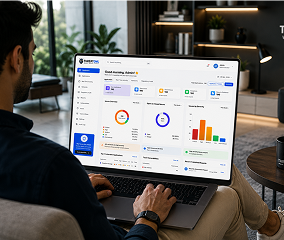
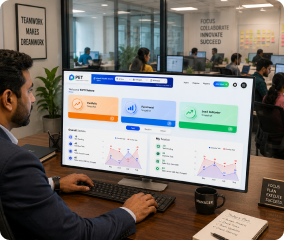
- Executive Dashboards & Advanced MIS: Delivers real-time visibility into project budgets, risk exposure, approval status, and financial performance. Advanced filterable MIS reports provide actionable intelligence for senior leadership.
- Enhanced Budget Precision: Minimizes financial deviation through accurate multi-year planning and forecasting.
- Centralized Financial Visibility: Eliminates data silos by tracking all project risks on a single, secure platform.
- Proactive Risk Resolution: Enables timely, data-driven decisions using interactive dashboards, variance analysis, and customized reporting.